Editorial Cientifica
Publication Costs
Editorial Integrity and Similarity Screening Policy


ISSN: 3087-2502
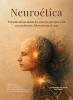
In this chapter, it is established that neuro-enhancement develops under the pressure of systemic self-exploitation, wherein the individual is driven to seek in biological improvement a solution to the multiple demands of contemporary society. The central thesis of this work argues that Neuroethics must act as the indispensable moral compass that guides this technological potential toward nonnegotiable principles of justice and dignity. The core of this stance resides in the philosophy of Emmanuel Levinas. It is argued that ethics does not arise from individual calculation or convenience, but rather from the encounter with otherness. The Face is the ultimate exposure of vulnerability and is irreducible to any neuroscientific data or brain performance metric. The imperative of the neighbor demands a radical deconstruction of the Self. The primacy of ethics lies in the departure from oneself—from sameness and totality—to encounter the absolute exteriority of the Other. This movement is fundamental because if the Self remains self-absorbed, it will conceive reality solely as that which it can measure, possess, or dominate. The Other ruptures this logic because they are not an object to be manipulated or violated; their mere presence imposes an unquestionable responsibility. Therefore, the connection with alterity is not an option, but the very moment in which the ethical self is born, compelling the prioritization of protecting the vulnerability of the other over the pursuit of individual optimization.
editorial@cuadernosdesofia.com
+56 9 3529 7200
Avenida Libertad 269, Oficina 904, Viña del Mar, Chile
Safe and secure data

A publishing house founded in 2014 by History and Geography professor Juan Guillermo Estay Sepúlveda, who left us his work and part of his legacy.
Editorial Cuadernos de Sofía SPA
77.649.795-9
Licencia Creative Commons Attribution-NonCommercial 4.0 International (CC BY-NC 4.0)
International License