Editorial Cientifica
Publication Costs
Editorial Integrity and Similarity Screening Policy


ISSN: 3087-2502
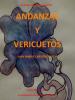
The raindrops patter outside, yet their echo resonates within the Buenos Aires café. Through fiber optics, the Andes are bypassed, forging a closer bond with my colleague, Juan Guillermo, whom I thank for inviting me to pen these lines and for introducing me to the Mexican literature of Briseño Cerda. Other intricacies. Primed by the Latin American “Crossing”—a bridge that, as in the poem that opens the book, is both delicate and a profound alchemy—I extend to readers an invitation to step into and wander through the pages that follow, guided by the author’s own assertion in the introduction of a perpetual transformation imbued with varied emotional hues and tones. Wanderings.
The eleven poems comprising the first part, in constant interplay with form and space (some verging on calligrams), stand out for their use of rhythm, the most striking example perhaps being the marked lament of “Escape or Emergency Exit.” A skillful baroque divertimento and other intertextual nods lead us to the second part. The short prose, often extremely concise in the style of microfiction, expands toward the final pages, forming a collection of fourteen stories. These explore diverse discursive voices, such as email and orality, and touch on themes that, through recurrences, weave a shared undercurrent: a certain ambiguous duality of the human condition (from multiple perspectives), endings and new beginnings, and the tension between will and free will (examined, at times, through the relationship between author, narrator, and character, as seen in “Puzzle” and “Revise”). There is also an engagement with the new, reinforced by the book’s very format, in pieces like “No Credit” and “An Email from the Riviera Maya.” In the latter, as well as in “A Journey to the Islands,” the historian’s wry, almost-smiling grimace peeks through.
A discovery or an unexpected, fortunate find. Not of a person, or perhaps so, but mediated by literature. Another serendipity.
Buenos Aires, April 6, 2018
Juan Manuel Lacalle

This work is licensed under a Creative Commons Attribution-NonCommercial 4.0 International License.
editorial@cuadernosdesofia.com
+56 9 3529 7200
Avenida Libertad 269, Oficina 904, Viña del Mar, Chile
Safe and secure data

A publishing house founded in 2014 by History and Geography professor Juan Guillermo Estay Sepúlveda, who left us his work and part of his legacy.
Editorial Cuadernos de Sofía SPA
77.649.795-9
Licencia Creative Commons Attribution-NonCommercial 4.0 International (CC BY-NC 4.0)
International License